






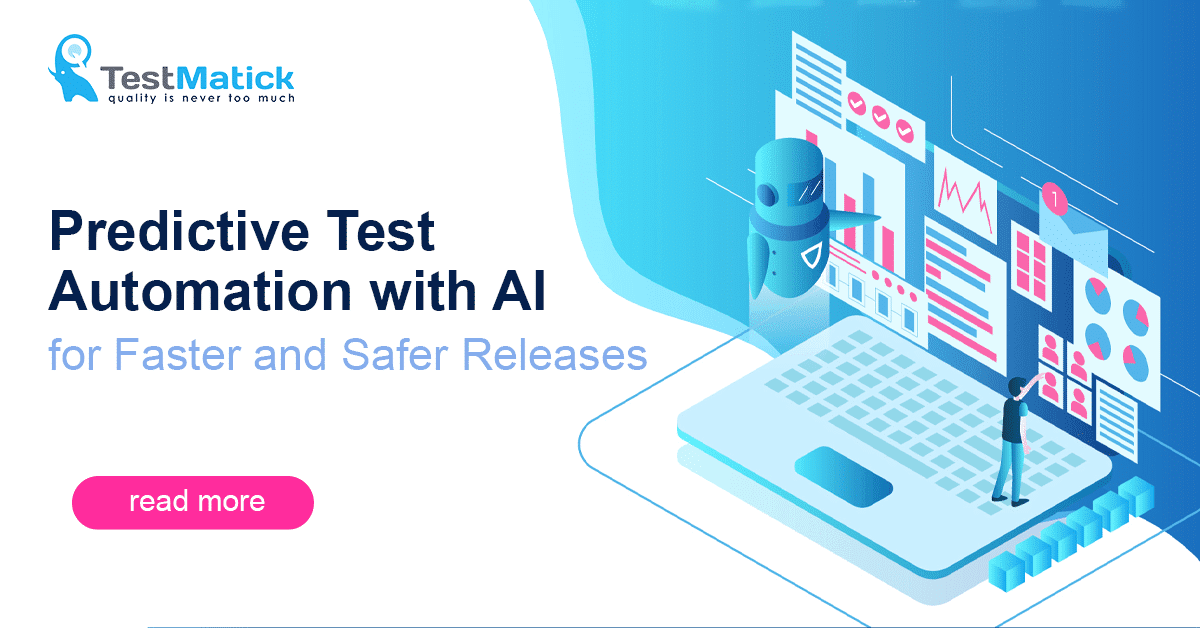
Artificial intelligence is changing the way QA teams plan, design, and execute tests. Beyond generating scripts or triaging failures, one of the most valuable capabilities is predicting where defects are likely to appear – before they do. Predictive test automation uses historical data, code signals, and runtime telemetry to forecast risk hot spots in your codebase. With that insight, teams can prioritize the right tests, allocate effort more intelligently, and ship faster with higher confidence.
This article explains how predictive testing works, what data you need, practical implementation steps, and how to measure success – plus pitfalls to avoid.
How AI Predicts Problems in Code
At its core, predictive test automation uses AI and machine learning (ML) models to analyze vast amounts of data and identify patterns indicative of potential defects. Instead of relying on predefined scripts, the AI system learns from historical data and uses that knowledge to make informed predictions. Think of it as an expert detective analyzing past crimes to predict where the next one will occur.
Here’s a closer look at the key data points and techniques AI uses to predict potential problem areas:
- Historical Defect Analysis: This is the most fundamental aspect. AI models are trained on historical data from past projects, including bug reports, test results, and code changes. The AI learns to correlate certain code attributes (e.g., complexity, number of lines changed, number of developers who worked on it) with a high probability of having a bug.
- Code Churn and Complexity Metrics: AI tools analyze code repositories to measure metrics like code churn (the frequency of changes to a specific file or module) and cyclomatic complexity (a measure of how complicated a program’s control flow is). Code that is frequently changed by multiple developers or has a high level of complexity is statistically more likely to contain defects. AI can flag these “hotspots” for prioritized testing.
- Static Code Analysis with a Twist: While static analysis has been around for a long time, AI-powered versions go further. They can learn to identify subtle, non-obvious code patterns that don’t violate standard rules but have led to bugs in the past. This allows for a deeper, more nuanced inspection of the codebase.
- Natural Language Processing (NLP) on User Feedback: AI can even process unstructured data like user support tickets, customer reviews, and bug reports to identify recurring issues. It can correlate this feedback with specific features or code modules, providing another layer of risk assessment.
Benefits of AI-Driven Predictive Testing
Moving to a predictive model isn’t just a minor improvement; it’s a fundamental change that offers significant advantages for software development teams.
Enhanced Efficiency and Prioritization 🎯
Instead of performing a broad, all-encompassing regression test, predictive AI helps testers focus their efforts where they are most needed. By identifying high-risk areas, the QA team can prioritize test cases for those specific modules, ensuring the most vulnerable parts of the application are thoroughly vetted first. This leads to a massive reduction in wasted effort and time.
Improved Test Coverage and Accuracy 💯
AI can generate new, optimized test cases by identifying gaps in current test suites. By analyzing code changes and user behavior, it can create test scenarios that might have been overlooked by human testers. This ensures a more comprehensive and accurate testing process, catching subtle bugs and edge cases that are notoriously difficult to find.
Faster Time-to-Market 🚀
With predictive insights, teams can catch bugs earlier in the development cycle, sometimes even before the code is merged. This “shift-left” approach reduces the cost of fixing defects, which exponentially increases the later they are discovered. By streamlining the QA process and reducing the time spent on manual or less-critical test cases, products can be released to market faster without compromising quality.
Cost Reduction 💰
By preventing costly bugs from making it to production and optimizing testing resources, AI-driven predictive automation provides a strong return on investment. It reduces the need for extensive manual testing, freeing up human testers to focus on more strategic and creative tasks like exploratory testing, which requires human intuition.
Challenges and the Human Element
Despite its immense promise, implementing AI-driven predictive testing isn’t without its challenges. The effectiveness of the AI models is highly dependent on the quality and quantity of the data used for training. Biased or incomplete data can lead to inaccurate predictions, causing the system to either miss critical bugs or flag false positives.
Furthermore, these systems require a significant initial investment in technology and expertise. Teams need to have skilled data scientists or engineers who can set up, train, and maintain the AI models.
Crucially, AI will not replace testers. Instead, it elevates their role. Testers of the future will become “AI wranglers” – interpreting the AI’s predictions, providing valuable context, and validating the results. Their unique human intuition and understanding of user behavior are irreplaceable and will be more valuable than ever in designing strategic test plans informed by AI insights. The future is a partnership between human expertise and machine intelligence, not a replacement.
The Future of Software Quality Assurance
AI is on the path to becoming an indispensable part of the software development lifecycle. In the not-so-distant future, predictive testing will be fully integrated into continuous integration and continuous deployment (CI/CD) pipelines, providing real-time feedback and automatically prioritizing testing efforts with every code commit.
We can also expect to see the rise of more autonomous testing agents that can not only predict bugs but also generate and execute test cases, analyze results, and even suggest potential fixes. This will allow teams to achieve a level of quality and efficiency that was previously unimaginable. By embracing AI for predictive test automation, software testing companies can lead the charge in a new era of proactive quality assurance, helping clients deliver more reliable, robust, and high-quality software to the world.



0 Comments