








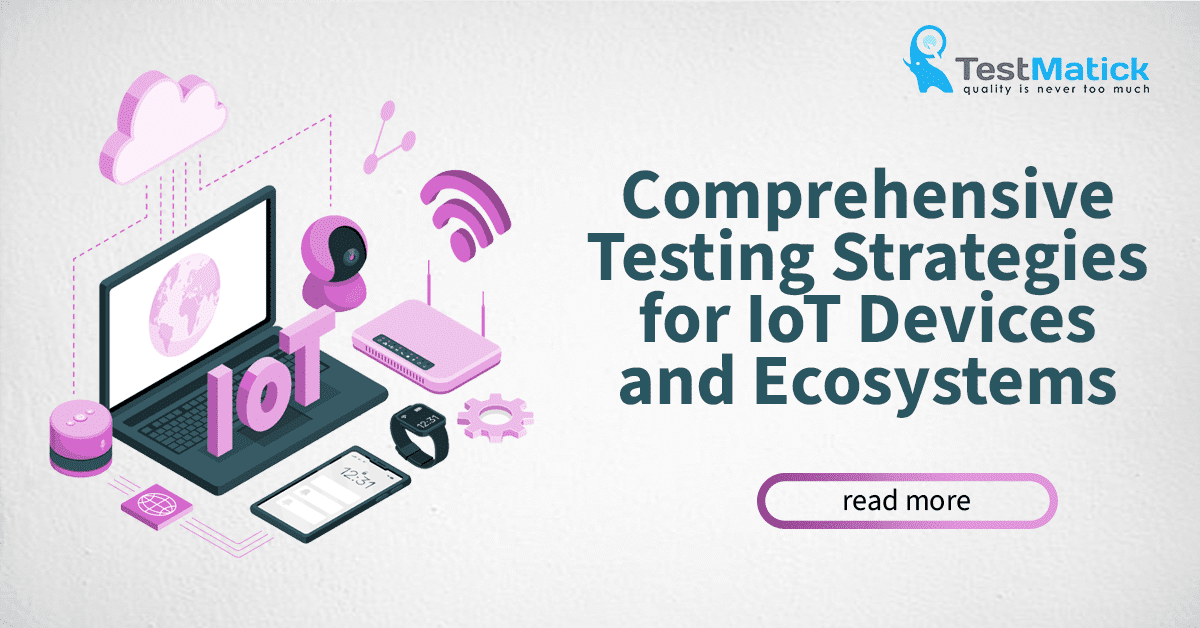
Why IoT Testing Demands a New Approach
The Internet of Things (IoT) is no longer just a buzzword – it’s a driving force behind innovations in smart homes, wearable tech, healthcare systems, logistics, agriculture, and industrial automation. But as IoT devices become more deeply integrated into our lives and businesses, ensuring they function reliably and securely becomes increasingly complex. Testing these systems presents unique challenges that extend far beyond traditional software QA.
An IoT device is not just software running on a screen – it’s a combination of hardware, embedded systems, sensors, communication protocols, and cloud infrastructure. This convergence of physical and digital elements requires a multi-layered testing approach that considers every component, both independently and as part of the entire ecosystem.
Tackling Connectivity Issues
One of the most critical aspects of IoT testing is ensuring stable connectivity. These devices often rely on a variety of network technologies – Wi-Fi, 4G/5G cellular, Bluetooth, Zigbee, LoRa, or satellite. Each presents its own set of challenges, from signal degradation and latency to network switching and congestion.
Effective testing must simulate real-world network conditions to verify that devices handle dropped connections, intermittent signals, and reconnections gracefully. If a device cannot recover from these scenarios, the user experience – and often safety – can be compromised.
Ensuring Sensor Accuracy and Reliability
Many IoT devices depend on sensors to gather real-time environmental data such as temperature, humidity, motion, light, or geolocation. These sensors are often sensitive to external conditions and can drift or degrade over time.
Testing sensor accuracy involves more than just confirming a response – it means validating consistency and correctness across a variety of environmental settings. Whether the device is used indoors or outdoors, stationary or in motion, under extreme heat or cold, it must provide reliable data to be considered trustworthy.
Interoperability: Making Devices Work Together
IoT ecosystems often involve a mix of devices from different manufacturers, each with their own firmware, APIs, and data formats. Achieving seamless integration between them is a major challenge.
Testing for interoperability means validating that devices can exchange data correctly, respond to standard protocols, and maintain performance even when other system components update or change. Without robust integration testing, even the most well-designed device can fail when deployed into a larger network.
Security Must Be Built In
IoT devices are increasingly a target for cyberattacks, especially those with weak default credentials, outdated firmware, or unsecured data transmissions. As many devices are deployed in sensitive contexts – such as healthcare, home automation, or industrial controls – the consequences of a security breach can be severe.
Security testing should include penetration tests, vulnerability assessments, and encryption validation. It’s also essential to verify compliance with relevant data protection regulations like GDPR, HIPAA, or industry-specific standards.
Layered Testing Across the Ecosystem
A structured approach to IoT testing involves validating each layer of the ecosystem:
- Network and Connectivity: Simulate variable network conditions and interruptions to assess data transmission stability and reconnection logic.
- Device and Sensors: Validate the accuracy and responsiveness of sensors under diverse real-world conditions.
- Cloud and Backend: Load test backend services, validate data processing logic, and assess the platform’s ability to scale with the number of connected devices.
This layered strategy ensures each component works reliably on its own and in coordination with the others.
Power Efficiency and Battery Performance
Many IoT devices operate on batteries and are expected to function for extended periods without recharging. Poor software optimization can lead to excessive power usage, shortening battery life and reducing device usability.
Tests should verify that power-saving features like low-power modes and sleep cycles work as intended. This is especially critical for devices deployed in remote or hard-to-reach areas, such as agricultural sensors or wearable health monitors, where frequent charging isn’t feasible.
Scalability: From One to Millions
A prototype may perform flawlessly in testing, but what happens when thousands – or millions – of devices are deployed? Scalability testing ensures that your backend infrastructure and data processing systems can handle the volume, speed, and complexity of large-scale deployments.
Simulations should stress-test cloud resources and validate whether real-time data streams can be ingested, processed, and visualized without latency or loss.
Field Testing: The Final Reality Check
Lab conditions help identify many issues early on, but real-world field testing is irreplaceable. Factors like weather, movement, interference, and user behavior can influence performance in ways that are hard to replicate in a test environment.
Field testing often reveals edge cases, sensor misreads, and usability problems that wouldn’t otherwise emerge – making it an essential phase before wide-scale release.
Best Practices for IoT Testing Success
To build a reliable IoT testing strategy, keep these practices in mind:
- Plan for both hardware and software: Test not just the code but the hardware interactions and environmental resilience.
- Automate the routine, test the edge cases manually: Let automation handle regressions, while testers focus on unusual, high-risk scenarios.
- Use digital twins: When physical devices are limited, simulate behavior virtually to run large-scale or edge-case tests.
- Implement continuous monitoring: After deployment, track device behavior and performance in real-time to catch and address issues quickly.
Conclusion: Testing for the Real World
At the core of IoT testing is risk mitigation. These devices operate in unpredictable environments, often autonomously, and handle sensitive data. A thorough, structured, and realistic testing strategy is not just a technical requirement – it’s a business-critical safeguard. As IoT adoption grows, so does the need for rigorous, holistic testing. From edge devices to cloud backends, each layer must be validated to ensure reliability, performance, and security in the real world.




0 Comments